| 13.05.2026
HEARD celebrates PhD student graduation
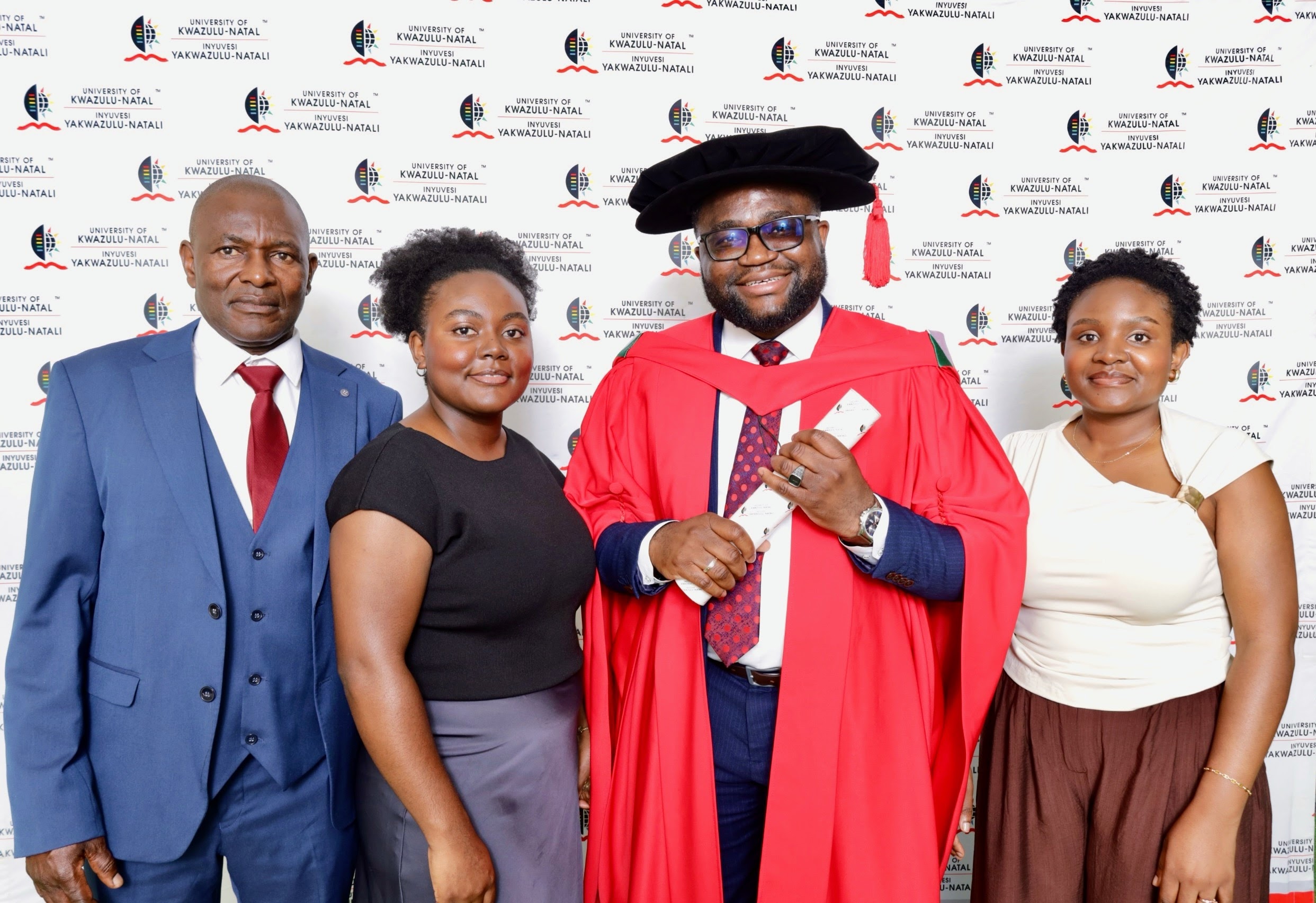
HEARD is celebrating the graduation of one of our students, Dr Warren Simangolwa, who was supported in his studies through the HEARD PhD Scholarship Programme. Below are a few insights on Dr Simangolwa’s PhD journey.
“HEARD PhD Journey Reflection: Dr Warren Simangolwa on Health Economics, Priority Setting and Fairer Health Benefits Package Design”
Thesis title: Optimising Health Benefits Package Design in Zambia: Integrating Economic Evaluation, Preference Modelling, and Deliberative Evidence for Informed Priority Setting.
What inspired you to start your PhD: I began my PhD in 2020, right in the middle of the COVID-19 pandemic, and that timing turned out to matter a great deal. The pandemic sharpened my thinking about health systems in a way that no textbook could. Watching countries scramble to make rapid, high-stakes decisions about scarce resources, service delivery, and who gets what care made the stakes of health economics feel very real and very immediate. It also exposed how fragile many health systems are when fiscal pressures mount and external support becomes uncertain.
That experience gave my PhD in health economics a sense of urgency and purpose. I wanted to contribute something practical, work that could help Zambia and similar settings make health benefits package decisions that are not only technically sound, but also fair, transparent, and grounded in what people actually value. I could see that stronger local economic evidence was needed, but so was a better understanding of public and policymaker preferences, and more inclusive processes for making difficult choices.
While my PhD drew on a wide range of methods, including economic evaluation, stated preference and choice modelling, computational social science, logistic regression, conditional logit analysis, and evidence synthesis, its contribution goes beyond the application of individual tools. At its core, the PhD developed an integrated framework that brings together evidence, values, and deliberation to support more equitable and transparent health benefits package design in Zambia and similar settings.
I am also proud that the work produced outputs beyond the thesis itself, including six papers prepared for international Q1 journals, with four already published and two under review. For me, this is a meaningful sign of both the rigour and the real-world relevance of the work.
The main findings of your PhD: The central lesson of my PhD is that you cannot optimise a health benefits package on economic evidence alone. Economic evaluation is essential, but decisions about what to prioritise must also reflect what people value, what is socially acceptable, and whether the process for making those decisions is fair and inclusive.
The study showed the importance of going beyond cost-effectiveness alone to include criteria such as equity, financial protection, accessibility, fiscal feasibility, implementation efficiency, and long-term sustainability. It also highlighted the need to strengthen local capacity and make decision-making processes more inclusive, particularly for patients and the public.
What I am most proud of is that the PhD did not stop at generating six interconnected pieces of evidence. It developed an integrated priority-setting framework for Zambia that brings economic evaluation, preference modelling, and deliberative evidence together in a coherent way, helping move health benefits package design from a purely technical exercise towards a process that is both analytically rigorous and socially grounded. While rooted in Zambia, the framework also offers lessons for other low- and middle-income countries navigating similar challenges.
Your plans for the future: I plan to continue working at the intersection of health economics, health financing, and priority setting, with a focus on helping governments and institutions make decisions that are more evidence-informed, equitable, and sustainable. I believe this work is as relevant today as when I began, and in many ways even more so.
With donor funding declining, fiscal space tightening, debt repayment pressures growing, and persistent inefficiencies in health systems, the questions at the heart of my PhD, what to fund, how to allocate limited resources, and how to build fairer financing systems, are only becoming more urgent. Across Africa and beyond, debates around national health insurance, universal health coverage, and the sustainable financing of essential services are intensifying.
I hope to contribute to those conversations through research, teaching, policy engagement, and technical support, particularly in areas such as health technology assessment, benefits package design, domestic resource mobilisation, and health financing reform. The PhD was a beginning, not an end.
A quotation that resounds with you: “Let us not give up in doing what is fine, for in due time we will reap if we do not tire out.” Galatians 6:9, New World Translation
This verse has carried me through the PhD journey. Starting and sustaining doctoral study during a global pandemic required a particular kind of perseverance: not dramatic, but quiet and steady. For me, this scripture speaks to the nature of meaningful work. It rarely yields its fruit quickly. It asks you to stay committed even when progress feels slow, to trust that doing what is right and worthwhile will, in time, make a difference. That is the spirit in which I approached this PhD, and it is the spirit in which I hope to carry the work forward.